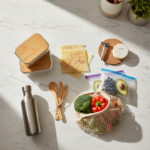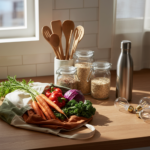
Plastic has infiltrated every corner of our lives. Open your kitchen cabinets. Check your bathroom drawers. Look in your car. The sheer volume of single-use plastic we accumulate without thinking is staggering.
Here’s what happens to that plastic fork you used for three minutes at lunch: it exists for the next 400 years. It doesn’t biodegrade. It breaks into smaller and smaller pieces—microplastics that now drift in our oceans, settle into soil, and show up in human blood samples.
The environmental crisis is real, but doom-scrolling won’t fix it. Action will.
Transitioning to reusable products isn’t about perfection or becoming a zero-waste warrior overnight. It’s about making deliberate choices that reduce harm, protect your health, and—surprisingly—save you serious money over time.
This guide cuts through the noise. You’ll find room-by-room strategies, honest cost breakdowns, and practical advice that acknowledges real life gets messy. No judgment, no preaching—just actionable steps you can start today.
The Case for Ditching Disposables
Understanding why this matters keeps you motivated when old habits creep back in.
Our Oceans Are Drowning in Plastic
Eight million tons of plastic waste flood into oceans annually. Picture a garbage truck backing up to the shore and dumping its entire load into the water. Now imagine that happening every single minute of every single day. That’s our current reality.
Sea turtles eat plastic bags they mistake for jellyfish. Seabirds feed plastic fragments to their chicks. Coral reefs suffocate under plastic debris. When you carry a reusable water bottle instead of buying disposable ones, you’re removing hundreds of bottles from this equation each year.
Scale that choice across millions of people, and we’re talking about measurable impact.
Your Health Deserves Better
Plastic packaging leaches chemicals into your food and drinks. Bisphenol A (BPA) and phthalates—endocrine disruptors linked to hormonal imbalances, reproductive issues, and increased cancer risk—migrate from containers into whatever they touch.
Heat accelerates this process. That leftover pasta you microwaved in a plastic container? It absorbed more chemicals than if you’d stored it in glass.
Glass, stainless steel, silicone, and bamboo alternatives don’t leach anything. They’re inert, non-toxic, and keep food fresh without contamination. This isn’t just eco-consciousness—it’s self-preservation.
The Money Adds Up Faster Than You Think
A quality reusable water bottle costs $25. Buying disposable plastic bottles? Easily $300 per year, possibly double if you purchase premium brands. Over five years, that’s $1,500 in savings from one swap.
Apply this logic to shopping bags, food containers, coffee cups, and produce bags. Yes, reusables cost more upfront. But lifecycle costs tell the real story. After the break-even point (usually within months), every use is pure savings.
Kitchen Swaps That Actually Work
Your kitchen generates the most plastic waste. It’s also where you’ll see the biggest wins.
Food Storage Solutions
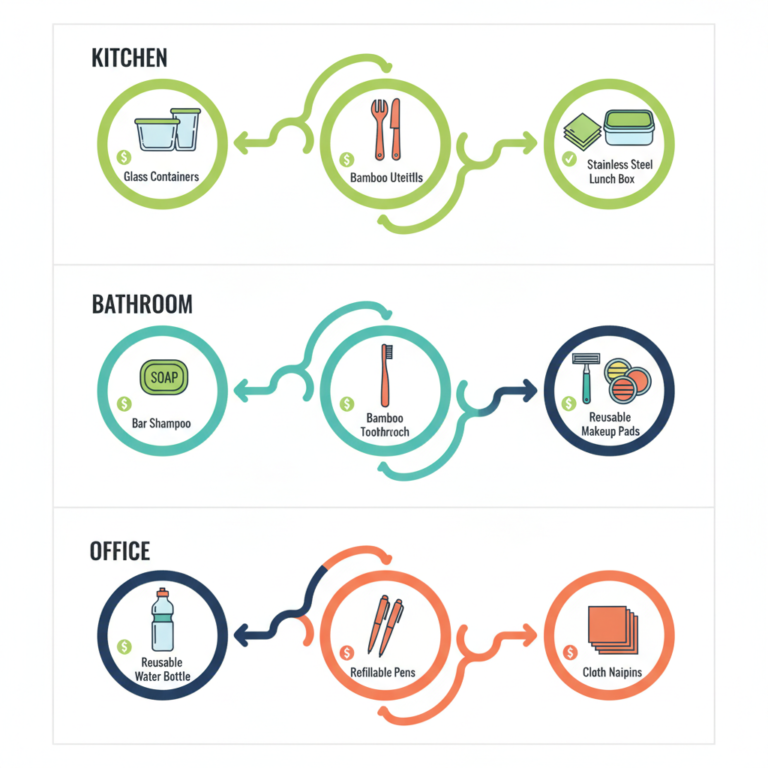
Glass containers with silicone lids are kitchen workhorses. They go from fridge to microwave to dishwasher without warping, staining, or absorbing odors. Unlike plastic containers that turn orange from tomato sauce and cloudy from dishwasher cycles, glass maintains clarity for years.
Beeswax wraps work beautifully for covering bowls, wrapping sandwiches, and storing cheese. Made from organic cotton infused with beeswax, jojoba oil, and tree resin, they mold with hand warmth. Wash with cool water, air dry, and they last about a year before composting.
Silicone food bags handle both freezer storage and sous vide cooking. They’re flexible enough for snacks yet durable enough for soups. Good ones last thousands of uses.
Stainless steel lunch boxes survive the abuse of daily commutes and school backpacks. They don’t retain smells, never crack, and keep food fresh without leaching chemicals.
Essential Kitchen Tools
Swap plastic spatulas and serving spoons for bamboo utensils. Bamboo grows rapidly (up to three feet in 24 hours), requires no pesticides, and naturally resists bacteria. With proper care—hand washing and occasional mineral oil treatment—they last years.
Stainless steel straws eliminate the 500 million plastic straws Americans use daily. Get straight ones for water, bent ones for smoothies, and wide ones for boba tea. The cleaning brush included with most sets makes maintenance simple.
Cloth produce bags replace those flimsy plastic bags at grocery stores. Mesh versions work for everything from apples to Brussels sprouts. The cashier can weigh produce right through the bag, and your vegetables actually last longer because cloth breathes.
Coffee lovers, consider reusable metal or cloth filters. They produce richer, more flavorful coffee while eliminating paper filter waste. Rinse after use, deep clean weekly, and they last indefinitely.
Bathroom Transformations Made Simple
Bathrooms hide plastic in plain sight—bottles, tubes, disposable razors, cotton swabs with plastic stems. Time to declutter and upgrade.
Personal Care Alternatives
Bar shampoo and conditioner eliminate bottles entirely. Modern formulations work for all hair types, from fine and straight to thick and curly. They’re concentrated, so one bar lasts as long as two or three bottles. Bonus: TSA-friendly for travel.
Bamboo toothbrushes feel identical to plastic ones while reducing the one billion plastic toothbrushes Americans discard annually. When it’s time to replace, compost the handle (remove the nylon bristles first).
Safety razors require practice but deliver superior shaves once you master the technique. The initial investment ($30-50 for quality) pays off quickly—replacement blades cost pennies versus $3-5 per disposable cartridge.
Refillable soap dispensers in glass or stainless steel look elegant on your counter. Buy liquid soap in bulk (many stores offer refill stations) or make your own from bar soap. You’ll reduce plastic waste while saving money.
Reusable makeup remover pads made from soft cotton or bamboo replace disposable versions. Toss them in a mesh laundry bag, wash with your towels, and reuse indefinitely. A set of 16 pads costs $12-15 and eliminates hundreds of disposable rounds.
Office Essentials Worth the Investment
Workplace sustainability matters, even if you’re not in charge of purchasing decisions.
Keep a reusable water bottle and coffee mug at your desk. You’ll skip the disposable cups at meetings and avoid the upcharge for bringing your own cup to coffee shops. Many cafes now offer discounts—typically $0.10-0.50 per drink—for customers with reusable cups.
Replace disposable pens with refillable fountain pens or mechanical pencils. Quality writing instruments feel better to use, perform more reliably, and reduce plastic waste dramatically.
Bring lunch in reusable containers* instead of disposable packaging. Store a set of **cloth napkins** in your desk drawer. Keep *metal utensils at work so you’re not dependent on plastic cutlery from takeout.
If your office is open to change, advocate for filtered water stations, reusable dishware in break rooms, and composting programs. Many companies embrace sustainability initiatives once someone raises the idea.
Material Durability: What Actually Lasts
Concerns about durability are legitimate. Will these products actually survive daily use?
Stainless steel is nearly indestructible. Quality stainless steel water bottles, food containers, and utensils last decades with minimal care. They don’t rust, dent only under serious impact, and maintain their appearance year after year.
Glass breaks, yes. But tempered glass is surprisingly resilient. Drop it on carpet or a cutting board, and it’ll probably survive. Even when glass does break, it’s infinitely recyclable. Unlike plastic, which degrades with each recycling cycle, glass maintains quality forever.
Silicone withstands temperature extremes from -40°F to 446°F. It doesn’t crack, peel, or degrade like plastic. Food-grade silicone bags and containers handle thousands of uses without showing wear.
Bamboo is naturally antimicrobial and remarkably strong. Hand wash (dishwashers are too harsh), dry thoroughly, and occasionally treat with mineral oil. Proper maintenance extends bamboo product life to 5+ years.
Compare this to single-use plastics designed for one use, or “reusable” plastic containers that stain, warp in the microwave, absorb odors, and need frequent