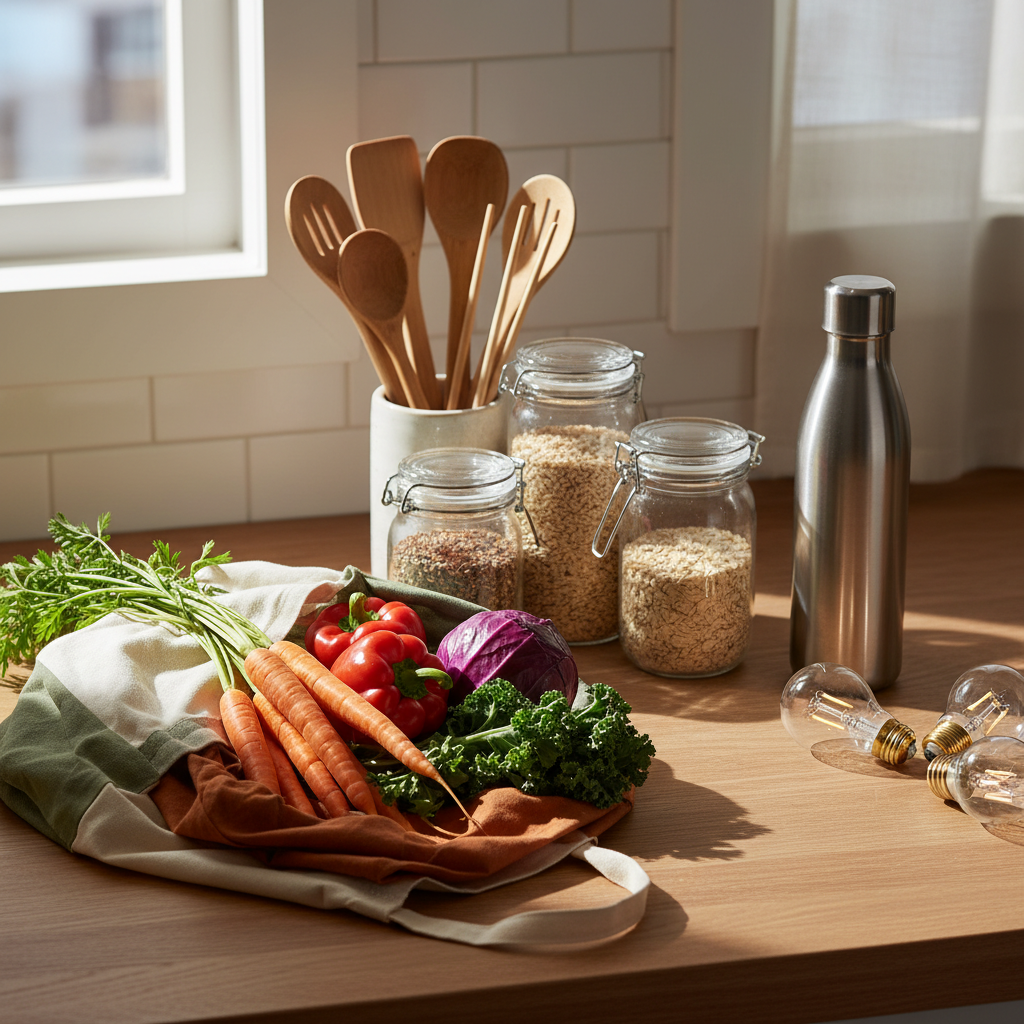
I’ll never forget the day I stood in my kitchen, staring at a drawer overflowing with plastic grocery bags stuffed inside other plastic grocery bags. That’s when it hit me: I’d become the person I always rolled my eyes at—someone who knew better but kept choosing convenience over conscience.
Maybe you’ve had a similar moment. Scrolling past another climate catastrophe on your phone while sipping from a disposable coffee cup. Tossing another Amazon box in the recycling bin (fingers crossed it actually gets recycled). Buying another cheap shirt you’ll wear exactly twice.
The gap between knowing and doing feels impossibly wide sometimes.
But here’s what changed everything for me: I stopped trying to be the perfect environmentalist and started being a consistently decent one. I failed often. Still do. Last week I forgot my reusable bags and came home with seven plastic ones. The difference is, I kept going anyway.
This guide isn’t about guilt or perfection. It’s about the practical, unglamorous work of actually living differently—one grocery trip, one energy bill, one conscious choice at a time.
Why Your Individual Choices Actually Matter (Even When It Feels Pointless)
Look, I get the cynicism. Corporations produce 71% of global emissions, so why should you stress about your plastic straw?
Because that’s exactly what those corporations want you to think.
Every time someone says individual action doesn’t matter, they’re letting systems off the hook. Your choices create demand. Demand shapes markets. Markets pressure corporations. This isn’t theory—it’s exactly how plant-based alternatives went from hippie health stores to McDonald’s menus.
When you choose differently, you:
- Signal to businesses what consumers actually value
- Normalize sustainable choices in your community (your neighbor notices your solar panels)
- Vote with dollars for the economy you want to see
- Model different possibilities for the kids watching you
Plus—and this matters more than people admit—living in alignment with your values feels better. The low-grade anxiety of contributing to problems you care about? It’s exhausting. Taking action, even imperfect action, lifts that weight.
The Unexpected Perks Nobody Talks About
Before we dive into the how-to, let me share what surprised me most about going greener. Everyone talks about saving the planet. Fewer people mention that you’ll probably:
Save serious money. My energy bills dropped 40% after some basic efficiency upgrades. I spend half what I used to on groceries now that I meal plan and waste less. Quality items that last years cost more upfront but save thousands over time.
Feel physically better. Fewer chemicals in your home means fewer headaches and respiratory issues. More plants in your diet typically means better energy and health markers. Walking or biking instead of driving builds fitness into your routine without needing a gym membership.
Declutter your life. Mindful consumption means less stuff cluttering your space and mental energy. Turns out you don’t need seventeen different cleaning products when vinegar and baking soda handle most jobs.
Connect with community. Shopping locally, joining tool libraries, participating in clothing swaps—sustainable living pulls you into networks of actual humans. Revolutionary concept, I know.
Your mileage may vary, but most people I know who’ve embraced this lifestyle report genuine improvements in quality of life, not just a cleaner conscience.
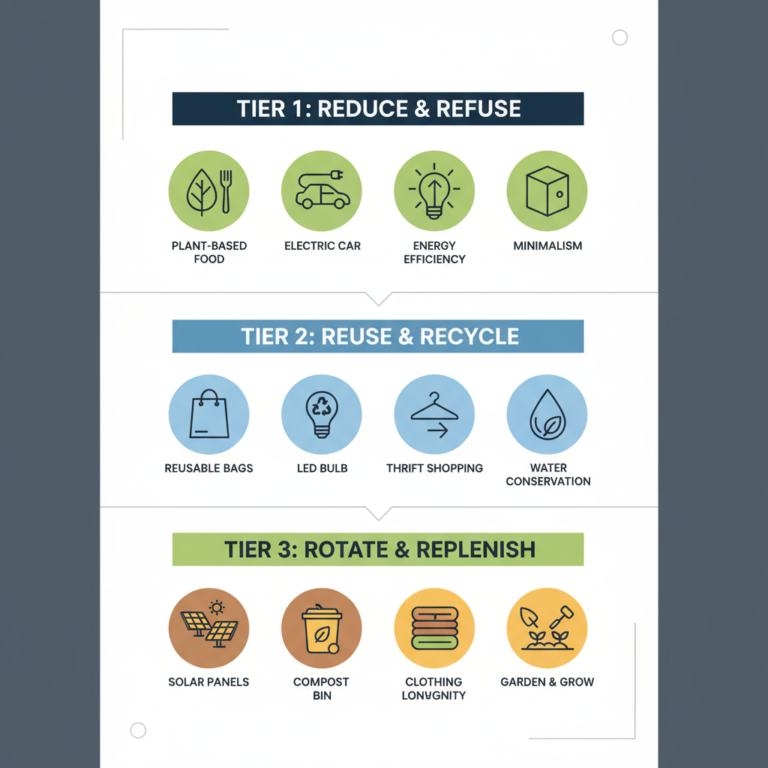
The Priority System That Actually Works
Most eco-friendly advice dumps fifty tips on you with no hierarchy. You get overwhelmed. You do nothing. Here’s the framework that helped me:
Tier 1: The Big Impact Changes
These deliver the most environmental benefit for your effort:
- Reducing meat and dairy consumption
- Driving less (or switching to electric/hybrid vehicles)
- Cutting energy use at home
- Buying less overall
Tier 2: The Easy Wins
Small effort, decent impact, builds momentum:
- Eliminating single-use plastics
- Switching to LED bulbs
- Shopping secondhand
- Fixing leaks and conserving water
Tier 3: The “When You’re Ready” Upgrades
Bigger investments or lifestyle shifts:
- Solar panels
- Composting systems
- Complete wardrobe overhaul
- Growing your own food
Start with one item from Tier 1 and a couple from Tier 2. Master those before adding more. This isn’t a sprint.
15 Practical Changes (With the Unvarnished Reality of Each)
1. Actually Learn What “Reduce, Reuse, Recycle” Means
Everyone knows this phrase. Most people get it backward.
Reduce comes first because it’s most effective. That impulse purchase you talk yourself out of? No resources extracted, no energy spent manufacturing, no waste generated. You just… didn’t buy it. Powerful.
Reuse is next. I’ve used the same glass jars for food storage for six years. My “cleaning rags” are old t-shirts with holes. It’s not Pinterest-pretty, but it works.
Recycle is the last resort, not the solution. And here’s what nobody told me: contamination ruins entire batches. That greasy pizza box you tossed in recycling? It potentially contaminated a whole load. Check your local facility’s actual rules. They vary wildly by location.
2. Make Your Home Stop Bleeding Energy
Walk through your home right now. How many things are plugged in doing absolutely nothing? Phone chargers. Coffee makers. That TV you haven’t watched in weeks.
“Phantom power” sounds like a sci-fi concept, but it accounts for 5-10% of residential energy use. Devices draw power even when “off” if they’re plugged in.
The quick fixes:
- Power strips you can actually switch off
- LED bulbs everywhere (yes, even that one weird lamp)
- Programmable thermostats (set it and forget it)
- Weatherstripping on drafty doors and windows
- Cold water for laundry (your clothes will survive, I promise)
The bigger commitments:
- Solar panels if you own your home and have decent sun exposure
- Energy Star appliances when old ones die (don’t replace working items just to upgrade)
- Insulation improvements, especially in attics and basements
I resisted the programmable thermostat for years because I’m stubborn. Finally installed one. Wish I’d done it sooner. The energy savings paid for it within six months.
3. Shift Your Plate (Without the Preachy Vegan Lecture)
I’m not vegan. I’m not even fully vegetarian. But I eat meat maybe twice a week now instead of twice a day.
Why? Because beef production uses 1,800 gallons of water per pound. Because livestock generates 14.5% of global greenhouse emissions. Because factory farming is horrific in ways I can’t unknow.
You don’t need to go cold turkey (pun intended). Start small:
- Meatless Mondays actually do something if millions of people participate
- When you do buy meat, choose chicken or pork over beef (significantly lower impact)
- Local, sustainably raised options when budget allows
- Experiment with actually delicious plant-based meals (not sad tofu squares)
The “but I love bacon” crowd needs to hear this: nobody’s prying bacon from your hands. Eating less meat still matters. Perfect is not required.
Also, reducing food waste might matter more than anything else you do in the kitchen. Meal planning, proper food storage, composting scraps—Americans waste 40% of food we produce. That’s insane.
4. Rethink Every Trip You Take
I live in a car-dependent suburb. Public transit here is a joke. I can’t bike to work because it’s 25 miles on a highway with no shoulder.
I still found ways to drive less.
Consolidating errands into one trip instead of multiple. Walking to the library three blocks away instead of driving. Carpooling with a coworker twice a week. Working from home when possible.
Could I do more? Absolutely. Am I doing something? Yeah.
If you live somewhere with actual infrastructure, you have more options:
- Public transit for commutes
- Bike lanes for local trips
- Car sharing programs for occasional needs
- Electric vehicles when it’s time to replace your car
Every mile not driven in a gas vehicle matters. The average car emits about a pound of CO2 per mile. Those short trips add up.
5. Wage Personal War on Plastic
Plastic has infiltrated every corner of modern life. It’s in our water. Our food. Our bloodstreams. Microplastics show up in human placentas now. This isn’t abstract.
You can’t eliminate it completely (I’m typing on a plastic keyboard), but you can seriously reduce it:
- Reusable shopping bags (I keep five in my car trunk and still forget them